
Microneedling has become a buzzword in skincare. It promises youthful skin, but what makes electric microneedling devices stand out in this crowded space?
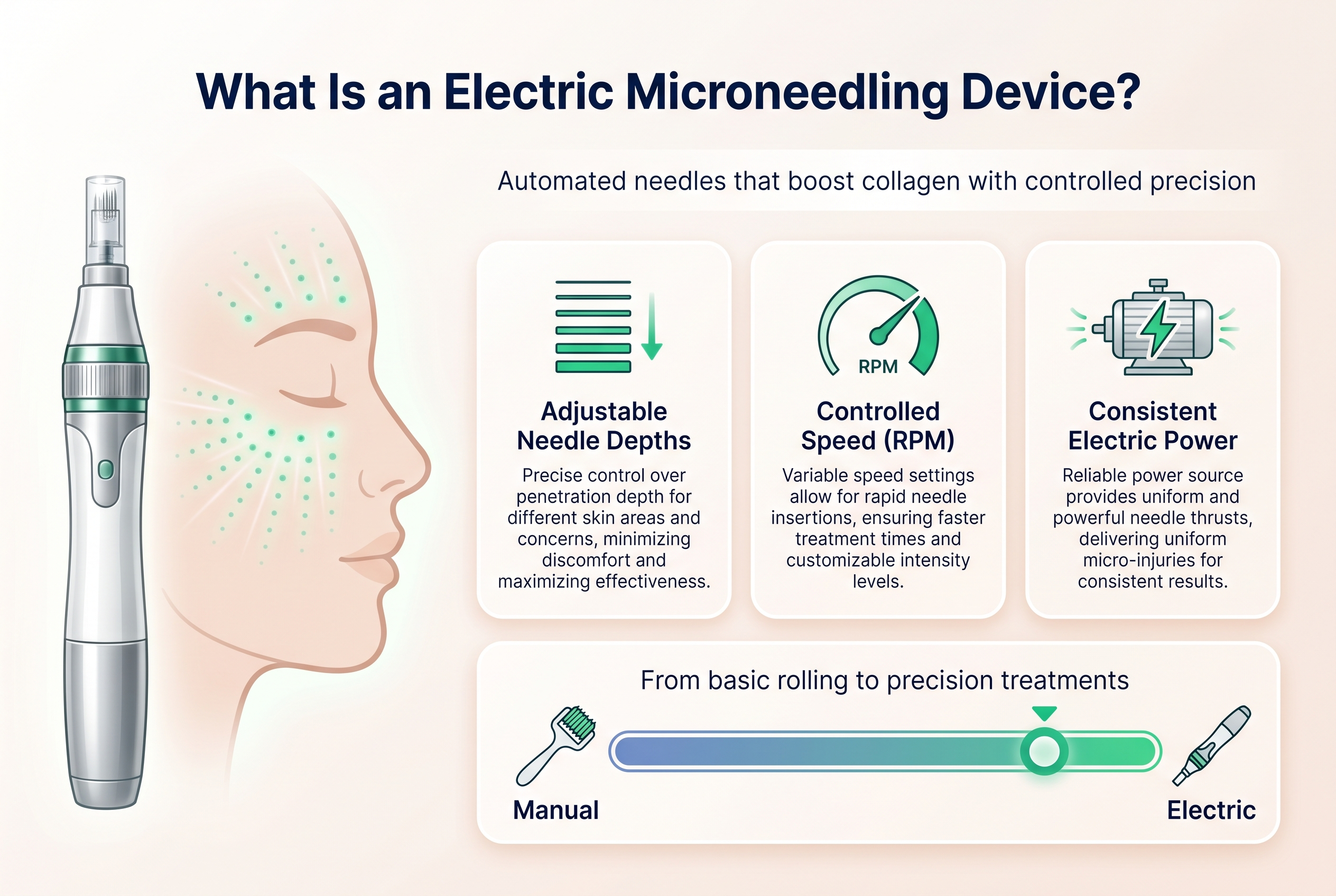
Electric microneedling devices automate the process, improving precision and boosting collagen production effectively. They stand out due to their adjustable needle depths and controlled speeds, unlike traditional rollers.
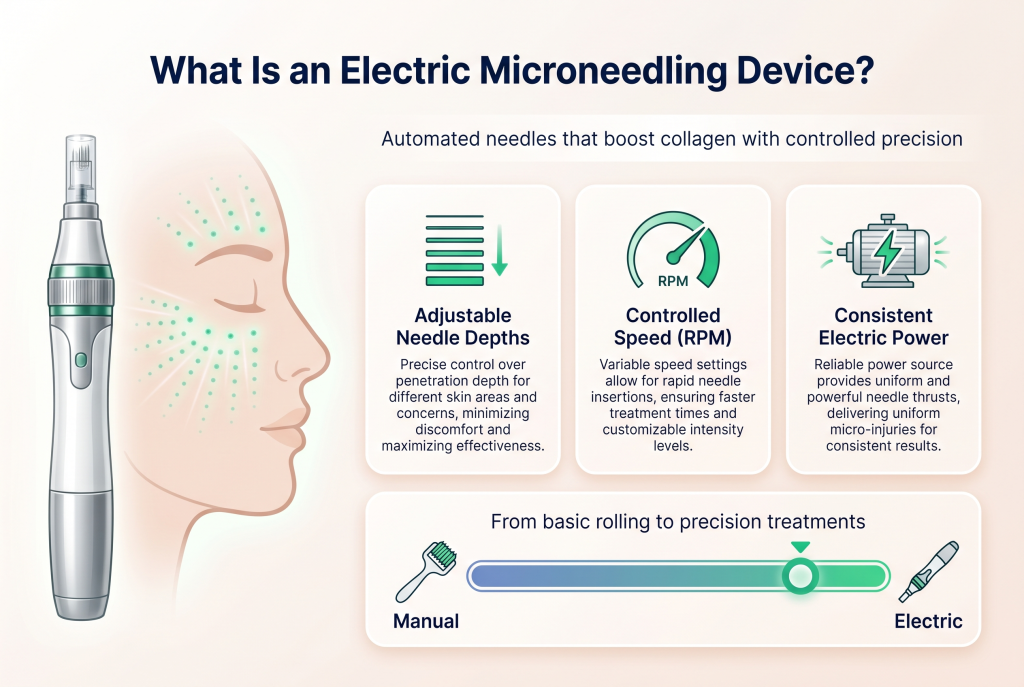
These devices are transforming cosmetic skincare by offering an innovative approach that combines effectiveness with flexibility. But what exactly are these devices and how do they differ? Let’s explore further.
What is a Microneedling Pen?
Curious how a microneedling pen works its magic? Here’s the lowdown.
Microneedling pens are precise devices that use tiny needles to create micro-injuries, promoting skin repair and collagen growth. Their electric nature ensures consistent results.
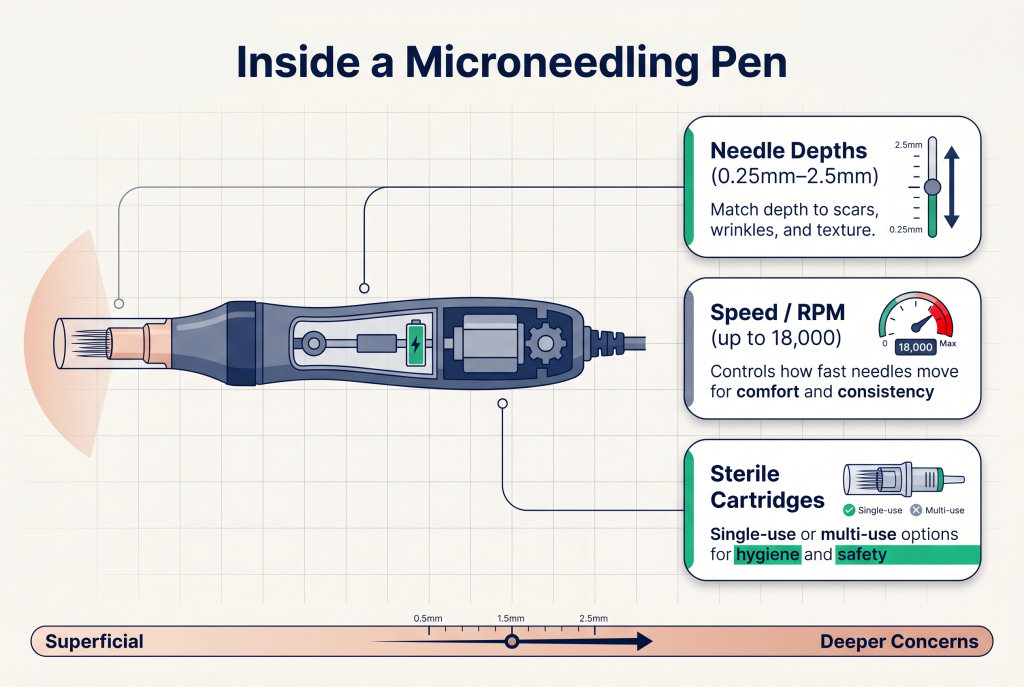
For those considering adding it to their regimen, understanding the pen’s components is key. These devices feature adjustable needle depths and speeds (measured in RPM), along with sterile cartridges. Adjustability ensures customization for different skin concerns, while cartridges ensure hygiene and prevent cross-contamination—critical factors for successful treatments. Dive deeper into features, and you’ll appreciate why reliability and precision are their selling points.
Dive Deeper into Microneedling Pens
The heart of a microneedling pen lies in its core mechanism and components. Here’s a structured breakdown:
| Component | Description |
| Needle Depths | Typically range from 0.25mm to 2.5mm for versatility |
| RPM | Speeds can range up to 18,000 RPM for different skin types |
| Cartridges | Can be single-use or multi-use, focusing on hygiene |
Customization options provided by microneedling pens are crucial. Different needle depths cater to specific skin concerns, such as acne scars or fine lines. The RPM (Rotations Per Minute) serves as a foundation for applying consistent pressure across treatment areas, ensuring uniform results. Cartridges, meanwhile, protect against contamination, maintaining safety.
How Microneedling Pens Work and How Do They Differ from Alternatives?
Wondering how microneedling pens stack up against other tools like derma rollers?
These pens use electric vibration to penetrate the skin uniformly. Unlike manual rollers which can cause uneven pressure, pens deliver consistent, controlled results.
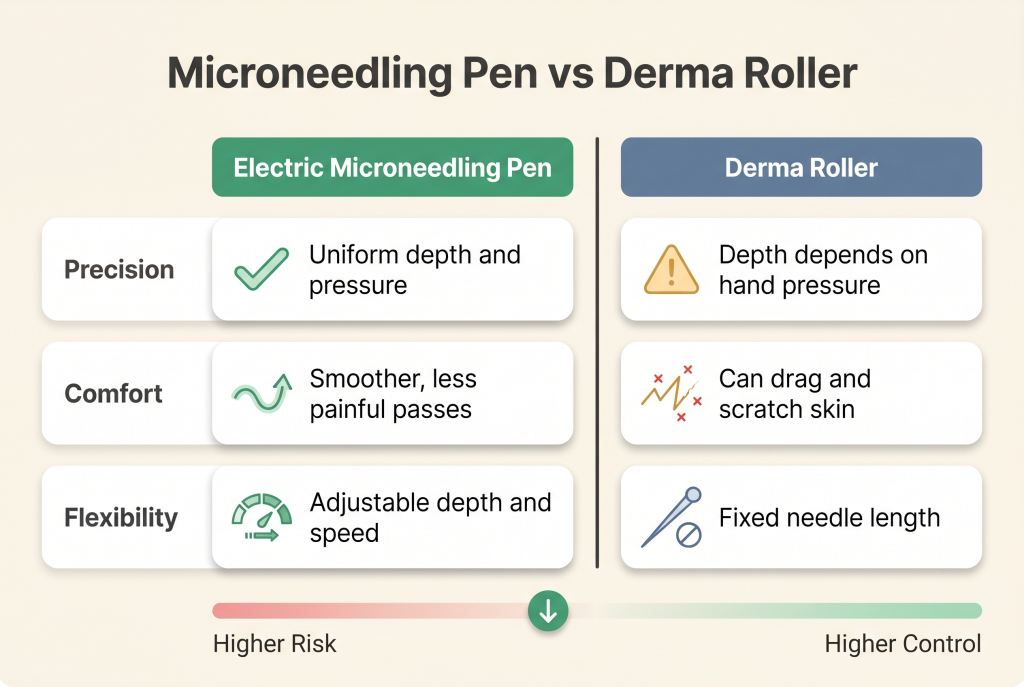
While derma rollers have introduced many to microneedling, the evolution to electric pens represents a leap in both user experience and treatment efficiency. The integration of a motor enhances precision. It also prevents common issues like unnecessary damage or discomfort often experienced with older tools. Focusing on quality, the cartridge and motor should be robust to maximize efficacy and safety.
Dive Deeper into Microneedling Tool Comparisons
The mechanism of microneedling pens is centered around the electric motor, which provides several advantages:
Precision: The motor’s role ensures uniform needle penetration, directly impacting treatment outcomes positively.
Comfort: Users benefit from reduced pain and discomfort due to consistent pressure.
Flexibility:Advanced models allow for depth and speed adjustments, serving diverse skin needs.
Contrasted with derma rollers which rely solely on user application force, pens guarantee an even treatment. Important factors like motor quality and cartridge design distinguish superior models. Prioritizing these elements ensures both practitioners and at-home users can achieve desired results without compromising safety.
Preparation and Safety Protocols: What Should You Follow?
Safety and preparation often determine microneedling results. Caught in doubts about protocols?
Effective pre-treatment involves skin cleansing and sterilizing the pen. Ensuring hygiene prevents infection risks and enhances treatment outcomes.
A structured approach is essential for safe microneedling. Proper protocols span from pre-treatment routines to ensuring device cleanliness. Knowledge of these routines and implementing best practices reassures users about process safety, easing concerns over perceived risks of microneedling. Here, understanding preparation standards fosters confidence for both beginners and professionals.
Dive Deeper into Safety Protocols
Dive Deeper into Safety Protocols
While microneedling offers cosmetic benefits, adherence to safety protocols is non-negotiable. Key areas include:
1. Pre-treatment Procedures:
– Cleanse face thoroughly.
– Use an appropriate numbing agent if required.
2. Device Hygiene Standards:
– Disinfect device components before and after use.
– Use sterilized cartridges to prevent bacterial contamination.
3. Readiness for Use:
– Ensure all parts are correctly assembled.
– Adjust settings such as speed and needle depth for individual needs.
By focusing on these elements, skincare professionals and at-home users can feel assured. They know that correct preparation significantly reduces risk, allowing them to enjoy the benefits of microneedling confidently.
Step-by-Step Treatment Techniques: How to Execute Effectively?
Navigating microneedling can feel daunting without knowing clear steps. Need a treatment blueprint?
Apply serum evenly during needling. Follow recommended patterns for different skin types to achieve optimal results.
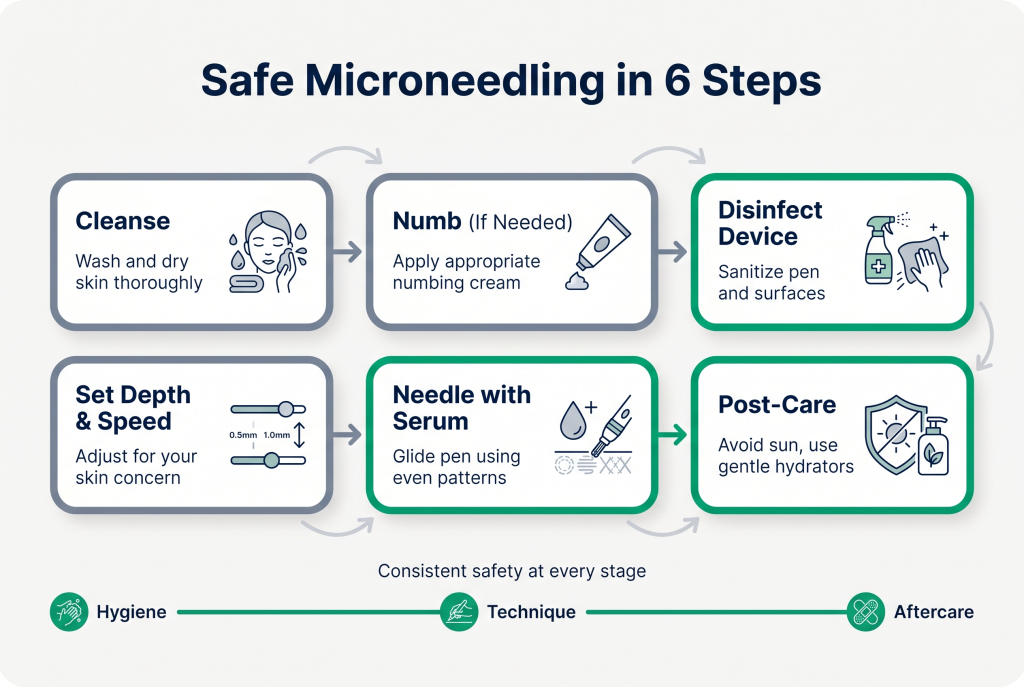
unique ensures safety and effectiveness. A step-by-step approach takes the guesswork out of microneedling sessions, meeting the needs of either practice or personal routine. Different needling patterns fulfill unique cosmetic ambitions, whether targeting pigmentation or boosting skin texture. Here, understanding techniques simplifies the complexity often associated with these devices.
Dive Deeper into Treatment Techniques
A successful microneedling procedure hinges on well-defined techniques. Breaking these steps into comprehensible actions maximizes outcomes:
Serum Application:
Ensure an even layer over the affected area to facilitate needle gliding and nutrient infusion.
Needling Patterns:
Employ techniques such as vertical or cross-hatch patterns;
Vertical: Best for small, localized treatment areas.
Cross-hatch: Ideal for broader regions requiring extensive coverage.
– Depth Guidelines:
– Superficial wrinkles: up to 0.5mm
– Moderate acne scarring: 1.0mm to 1.5mm
With practiced techniques, professionals and DIY users can achieve rejuvenating results. Arming oneself with knowledge about diverse treatments, pressure application, and modifications creates consistency in possible outcomes.
Face Mapping: Area-Specific Techniques, What Should You Target?
Unsure about microneedling across different facial zones?
Employ face-specific patterns and pressure techniques to treat individual needs accurately and safely.
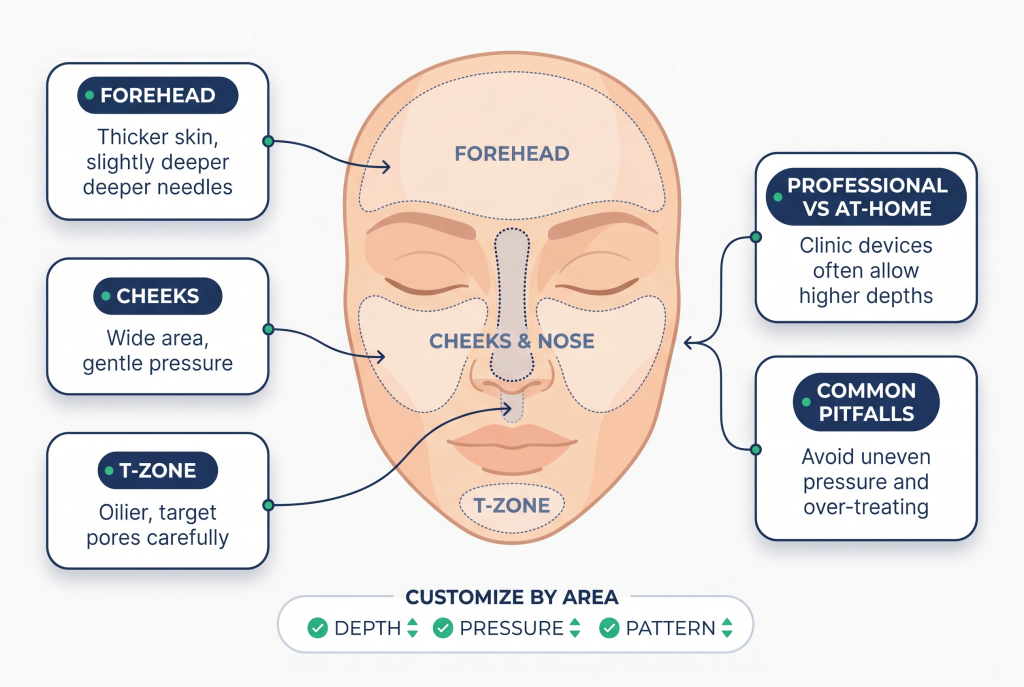
Understanding how various facial sections respond to microneedling is vital. Tailored approaches enhance efficacy while avoiding over-treatment in delicate areas. UIKit mapped approach allows users and professionals alike to cater their routines, focusing on microtargeted needs in sectors, such as the T-zone or cheeks. These distinctions in practice elevate overall treatment outcomes.
Dive Deeper into Face Mapping Techniques
The face is a complex area with various zones requiring distinct approaches. Mapping these areas and applying specific techniques can make an entire world of difference:
-Forehead:
Typically thicker, enabling deeper needle penetration.
– Cheeks:
Larger areas but require gentler pressure due to sensitive skin.
– T-Zone:
Often oilier with issues like blackheads; gentle and targeted treatment works best.
Each area benefits from unique considerations. Employing appropriate depth and pressure allows the user to maximize the device’s potential safely. Such specificity in techniques minimizes potential risks while enhancing immediate results for improved skin tone and texture.
Unique Angles and Advanced Considerations: How Can You Elevate Your Approach?
Facing challenges in customizing microneedling for specific needs?
Innovate by adopting personalized techniques and advanced tool features, yielding professional-grade results even for at-home sessions.
The appeal of microneedling often lies in personalization. Unique angles and developments in equipment ease usage, making professional outcomes accessible. Combining cutting-edge features with adaptive treatment styles ensures users capitalize on their tool’s functionality, addressing distinct beauty goals confidently. Here, advanced considerations demystify this process, making expert methods attainable to everyone.
Dive Deeper into Advanced Considerations
Professional versus at-home use is a frequent concern when considering microneedling. The advent of versatile devices blurs these lines, offering insights into customizations not to overlook:
1. Specific Concerns:
Customize needle depths and patterns to target acne scars vs. anti-aging.
2. Professional vs. At-home Devices:
Professional devices may offer additional features like power settings and enhanced precision.
3. Common Pitfalls:
Avoid inconsistent pressure application, which can lead to patchy results.
Misjudged depth settings can intensify risks without added benefits.
Utilizing these variants and advanced tool features refines microneedling practices. Awareness of common pitfalls leads to effective sessions with minimized concerns, providing clarity and generate optimal results independently.
Conclusion
In microneedling, quality devices, safety, and precision in technique are paramount for achieving optimal outcomes.
Related wholesale resources
Need Dr.Pen wholesale pricing?
Tell us your country, product model and estimated quantity. We will recommend suitable models, cartridge options and shipping method.