Microneedling for Acne Scars: Is It the Solution for You?

Leading paragraph:Imagine walking out the door without worrying about acne scars. Many search for a reliable solution to this common concern.
Microneedling can significantly reduce acne scarring. Studies report up to 60% improvement after three months of treatment, offering a non-invasive solution.

The thought of finding an effective treatment can be both exciting and daunting. Let’s explore how microneedling might help you achieve clearer skin.

Does Microneedling Really Work for Acne Scars?

You’ve probably heard mixed reviews. Is microneedling truly effective against acne scars?

Yes, microneedling is effective for acne scars, boasting a 51-60% improvement after three months of treatment.

To understand microneedling’s efficacy, we look at clinical studies. These studies show consistent improvement in scar visibility, with 51-60% reduction in scar depth following a series of sessions over three months. This effectiveness is attributed to the skin's natural healing process stimulated by micro injuries. These tiny pricks prompt collagen production, a key protein in skin repair. Collagen induction therapy, as its sometimes called, leverages the body's natural repair mechanisms. Patients often report significant scar reduction and improved skin texture after multiple sessions.

How Does Microneedling Treat Acne Scars?

Curious about how microneedling tackles those deep-rooted scars?

Microneedling treats acne scars by inducing collagen production, repairing skin at the cellular level for rejuvenation.

Microneedling employs tiny, sterilized needles to create micro-injuries in the skin’s surface. These micro-injuries stimulate the body’s natural healing response, activating fibroblasts, the cells responsible for collagen and elastin production. The influx of these proteins rejuvenates the skin, smoothing and plumping pitted scars. Over time, this process rebuilds skin structure, reducing the appearance of scars and improving overall texture. Besides collagen production, microneedling also enhances the absorption of topical treatments, making them more effective. This dual action—skin stimulation and absorption enhancement—makes microneedling a robust option against acne scarring.

What Types of Acne Scars Respond Best to Microneedling?

Not all scars are created equal. Which types respond best to microneedling?

Understanding scar types is essential for gauging microneedling’s potential. Atrophic scars, characterized by loss of tissue, are most common. These include boxcar (broad, shallow indentations), rolling (wave-like appearance), and ice pick scars (deep, narrow). Microneedling excels with boxcar and rolling scars due to its collagen-stimulating capabilities. This stimulation thickens the skin, reducing scar depth. Ice pick scars, due to their depth, might require complementary treatments for optimal results. When evaluating whether microneedling is ideal, consulting a professional to assess your specific scar types can guide effective treatment plans.

How Many Microneedling Sessions Do You Need?

Wondering how many sessions it takes to see real change?

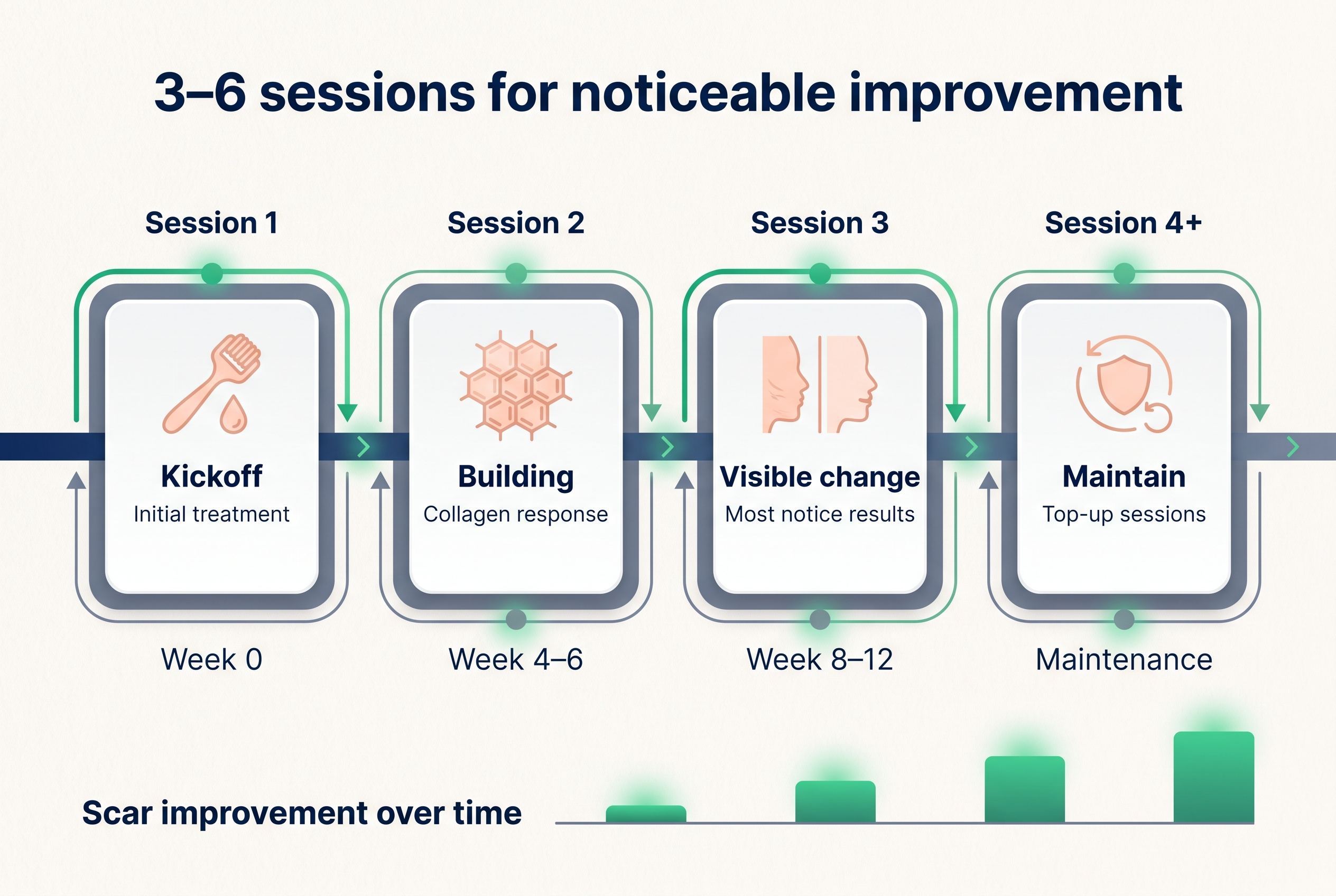
Each individual’s skin and scar condition vary, defining session needs. Generally, patients require between 3 to 6 sessions, each spaced four to six weeks apart. This timeline allows the skin’s natural repair processes to take effect fully. After the initial results appear, maintenance sessions every 6-12 months help preserve improvements. Factors influencing session frequency include the severity of scars, skin type, and the body’s response to microneedling. Each session builds on the last, with most patients noting significant progress by the third session. Regular evaluation by a skincare professional ensures treatment aligns with skin’s condition and response.

Is Microneedling Safe for All Skin Types?

Is it suitable regardless of your skin tone?

Snippet paragraph:

Microneedling is generally safe for all skin types, with careful handling required for darker skin tones to avoid hyperpigmentation.

Atrophic scars, including boxcar and rolling scars, show the best improvement with microneedling treatments.

Microneedling is hailed for its applicability across various skin types. Unlike some treatments that target specific skin pigments, microneedling is mechanical and doesn’t rely on light or heat, making it suitable for darker skin tones. However, the risk of post-inflammatory hyperpigmentation (PIH) means treatment should be approached cautiously. Precise needle depth, sterilization, and experienced practitioners reduce these risks. Post-treatment care is vital. Skincare professionals often recommend specific serums and sun protection to optimize healing while minimizing pigmentation risks. Personalized assessments ensure safety and efficiency, addressing individual skin concerns and histories.

Can You Combine Microneedling with Other Treatments?

Wondering if combining treatments might enhance results?

Yes, combining microneedling with PRP or serums can enhance results and shorten recovery.

Combination therapies leverage the strengths of multiple treatments. Platelet-Rich Plasma (PRP), derived from the patient’s blood, is rich in growth factors that boost healing and collagen production, complementing microneedling. When applied post-microneedling, PRP accelerates recovery and enhances results, making it ideal for deeper scars. Topical serums, rich in vitamins and peptides, also benefit from microneedling’s enhanced absorption effect. These combinations not only boost effectiveness but can also address a broader range of skin concerns. Always consult with a skincare professional to tailor a treatment plan to your specific needs and skin conditions.

What Are the Side Effects and Recovery Time?

Leading paragraph:

Concerned about the aftermath of microneedling?

Snippet paragraph:

Typical side effects include redness and swelling, with recovery time generally at 2-3 days.

Post-microneedling, patients often experience mild side effects such as redness, swelling, and minor bruising, akin to mild sunburns. These effects typically subside within two to three days. The treated area might feel warm or tight, indicating the body’s healing processes at work. Important recovery practices include avoiding sun exposure, using gentle skincare products, and staying hydrated. Specific serums like hyaluronic acid can aid in soothing and hydrating the skin during recovery. Monitoring for unusual reactions and maintaining open communication with your treatment provider ensures any issues are promptly addressed. Overall, minimal downtime makes microneedling a convenient option.

What Is the Cost of Microneedling for Acne Scars?

Budgeting for beauty can be tricky. What costs should you expect?

Microneedling costs between $425 and $700 per session, making it a cost-effective alternative to invasive treatments.**

Microneedling’s cost varies depending on the provider’s expertise, session length, and geographic location. Typically, a session ranges from $425 to $700. When compared to more invasive procedures like laser therapy, microneedling offers similar benefits at a fraction of the cost. Plus, its minimal downtime adds indirect savings. Considering the average requirement of 3-6 sessions, budgeting for the entire course is crucial. Some clinics offer package deals, reducing per-session costs. Evaluating cost against benefits, including aesthetic improvement and confidence gains, positions microneedling as a holistic, worthwhile investment in skin health.

What Should You Expect During a Microneedling Procedure?

Curious about the microneedling experience?

The procedure involves cleansing, numbing, microneedling, and soothing, lasting 30-60 minutes.

A microneedling session typically starts with a thorough cleansing of the face, followed by the application of a topical anesthetic to minimize discomfort. Once numbing takes effect, the practitioner uses a microneedling device to create controlled punctures in the skin. This process takes about 30 minutes. Post-treatment involves applying calming serums or a healing mask to soothe the skin. Patients might feel warmth or tingling, akin to light sunburn. Deep hydration and gentle care post-procedure aid recovery. An hour-long resting time post-procedure is recommended to let the skin settle. Discuss any concerns with your provider beforehand to ensure a comfortable experience.

Microneedling vs. Other Acne Scar Treatments: Which Is Best?

Is microneedling the right choice against other treatments?

While microneedling is effective and less invasive, some scars may need combined or alternative treatments like laser therapy for best results.

A comparative approach clarifies the best path for acne scarring. Microneedling’s advantage is its minimally invasive nature and shorter recovery time compared to laser treatments, which use light to reduce scar visibility. While lasers may offer superior results for certain scars, they often require longer downtime and have higher costs. Chemical peels offer improvement but more for superficial scarring. A blended strategy, using microneedling with other treatments like PRP, often yields the best results across various scar types. Consulting with professionals ensures optimal combination, tailored to individual needs and skin conditions.

Conclusion

Microneedling offers promising results for acne scar treatment, proving a competitive option with less downtime and cost, especially when tailored by professionals with combined therapies.