
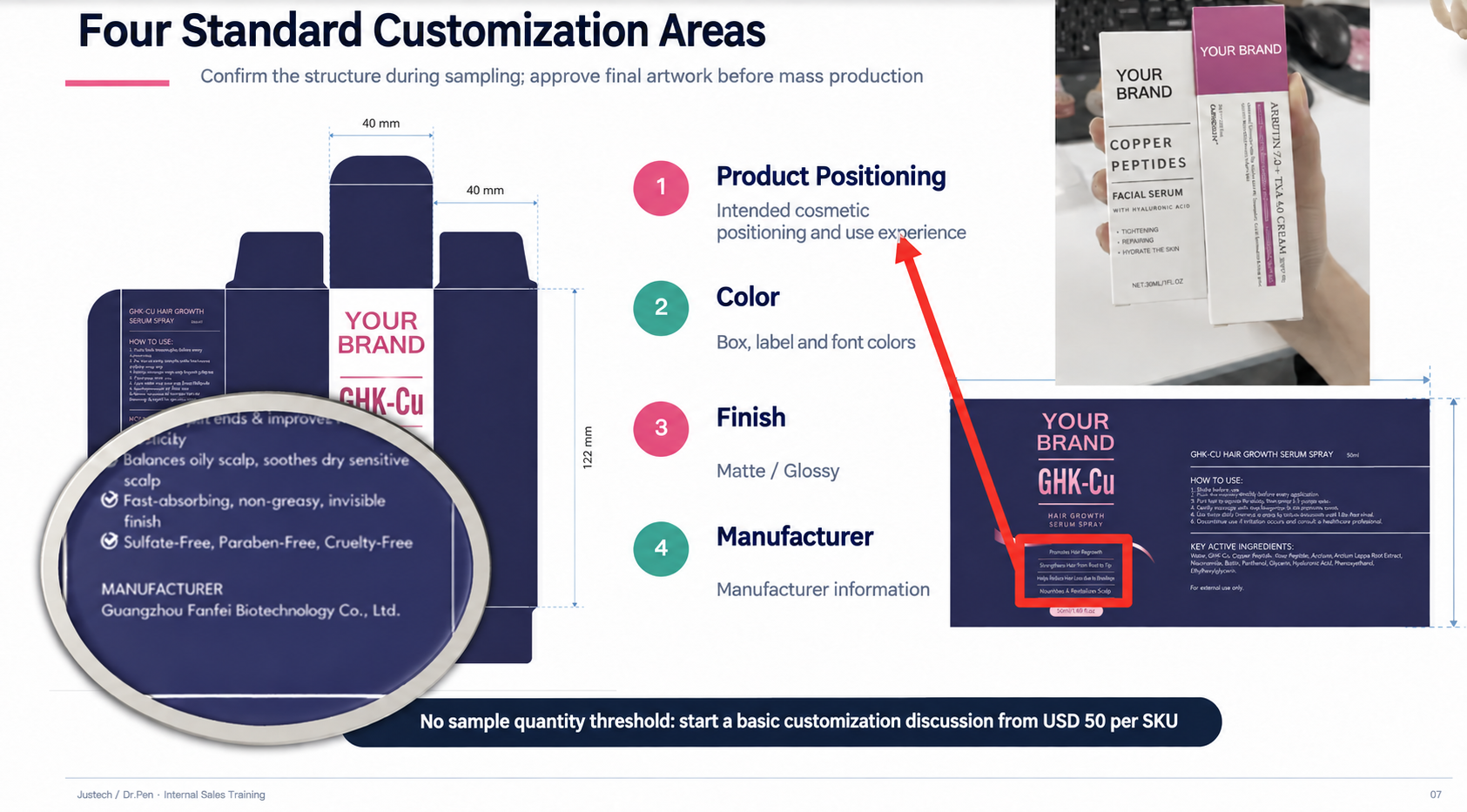
Launching a serum under your own brand involves more than placing a logo on a stock bottle. The formula, dispensing system, bottle, label and outer box must work together—and the finished artwork must match the documentation and requirements of the destination market.
Justech supports low-MOQ serum customization for beauty brands, salons, clinics, training businesses and distributors. For selected standard formulas and packaging combinations, production can begin from 100 bottles. We can also help buyers evaluate an idea before committing to a production order.
This guide explains the four main areas you can customize, how the sample and artwork process works, and what information to send for an accurate quotation.
What Can Be Customized in a Private Label Serum?
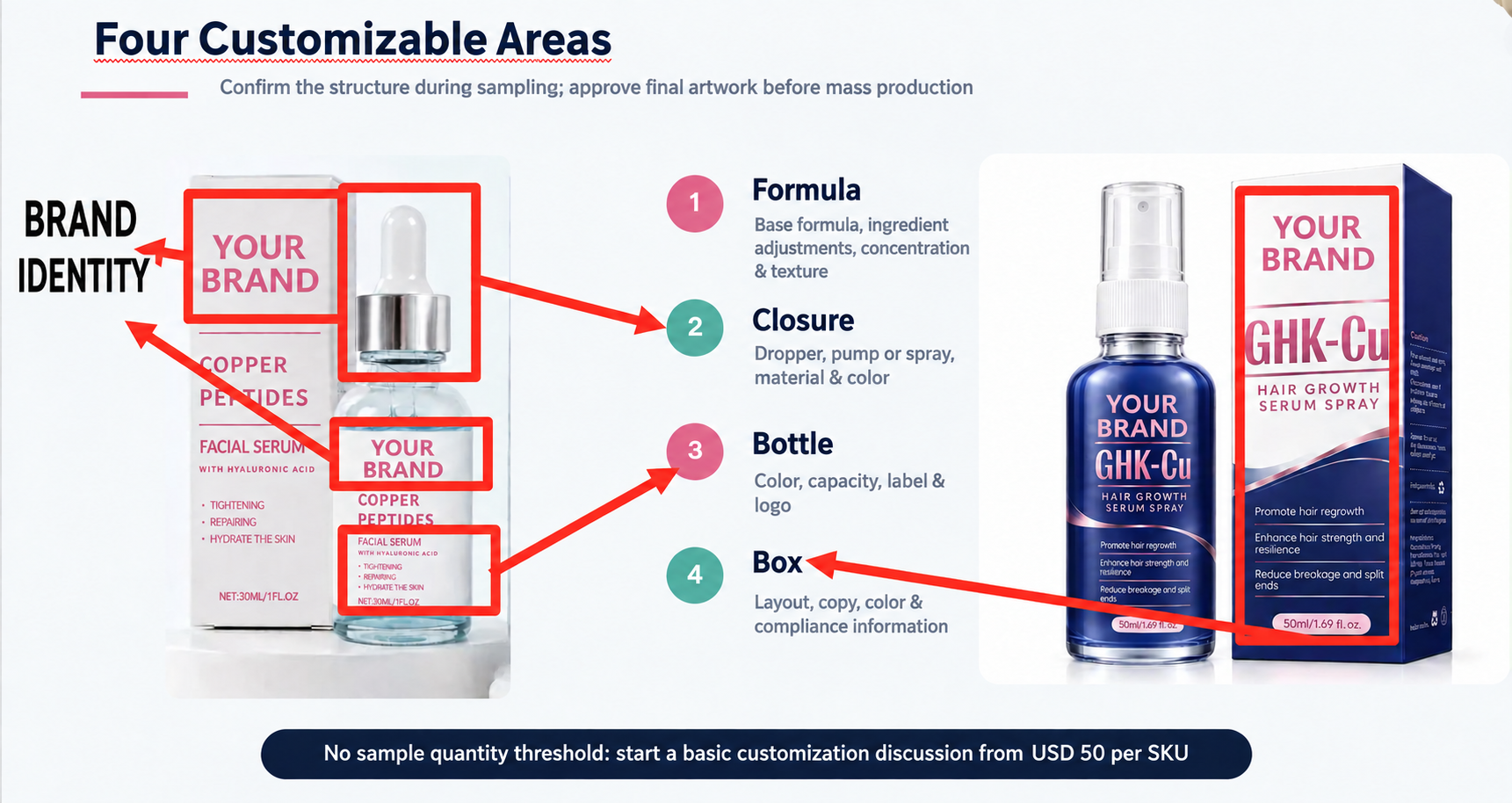
1. Formula, Concentration and Texture
The first decision is the product concept. Depending on the available base formula and supporting documents, buyers may discuss:
- the type of cosmetic serum;
- ingredient options and permitted concentration ranges;
- viscosity and skin feel;
- fragrance-free or other sensory preferences;
- fill volume and intended retail positioning.
Existing formulas normally provide the fastest and most economical route to market. A substantial change to the formula may require additional sample rounds, stability work, compatibility checks, testing or documentation.
Product names and benefit statements are not approved automatically. Final claims must be supported by the selected formula and reviewed for the destination market. Justech does not recommend publishing medical, therapeutic or guaranteed-result claims without appropriate evidence and regulatory review.
2. Dropper, Pump, Spray Head or Cap
The closure affects both appearance and customer experience. Options may include:
- glass droppers;
- pump or spray dispensers;
- cap materials and finishes;
- black, white, silver or platinum-style colors;
- components selected for the viscosity and fill volume.
Compatibility is more important than appearance alone. The selected closure should be checked against the bottle neck, formula viscosity and expected transport conditions before mass production.
3. Bottle, Capacity and Label
The bottle is the most visible part of a private label serum. Standard options may cover:
- bottle color and material;
- 30 ml, 50 ml or other available capacities;
- printed labels or direct decoration where supported;
- brand name and logo placement;
- required batch, net-content and responsible-party information.
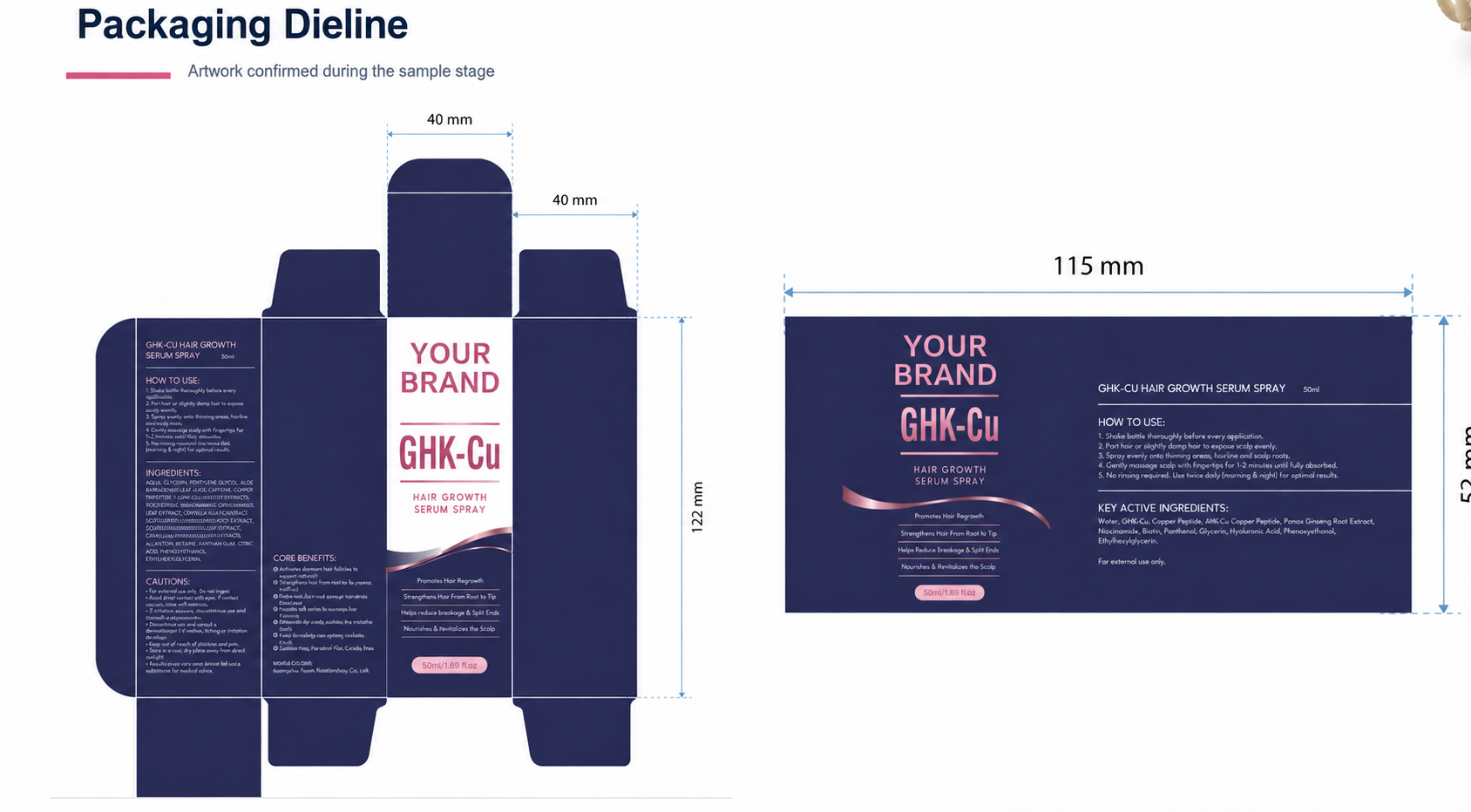
At the sample stage, we confirm the visual structure. Before production, the buyer must approve the final artwork, dimensions and mandatory market information.
4. Outer Box and Packaging Artwork
The outer carton can be customized to match your positioning and sales channel. Typical artwork areas include:
- brand identity and color palette;
- product name and cosmetic description;
- ingredient list and directions;
- cautions and storage information;
- net content, batch/lot fields and manufacturer or responsible-party details;
- barcode, recycling symbols and other market-specific information where applicable.
Standard color and artwork changes may be included within an agreed customization package. Special materials, finishes, molds, printing methods or regulatory work can change the price and lead time, so they must be confirmed in the quotation.
How the Serum Customization Process Works
Step 1: Send a Clear Product Brief
For a useful first reply, send:
- destination country;
- buyer type and sales channel;
- serum type or preferred formula;
- bottle capacity and closure;
- target quantity;
- label and box requirements;
- logo or draft artwork if available;
- target launch date.
This prevents a generic quotation and helps Rachel recommend a practical formula, packaging and order path.
Step 2: Confirm the Sample Route
A basic customization discussion can start from USD 50 per SKU. This is an entry point for confirming the product structure and customization brief; it is not the total production price.
For eligible projects, Justech also offers a USD 99 sampling and logistics program. The exact contents, destination coverage and formula eligibility must be confirmed before payment.
Step 3: Review the Formula and Documentation
Current products have an MSDS available. Additional documents—such as ingredient specifications, COA, microbiological testing, stability information or market-specific files—depend on the formula, production batch and destination-market requirements.
Buyers should confirm document requirements before approving the sample or printing packaging. A document available for one formula should not be assumed to cover a different concentration or a substantially modified formula.
Step 4: Approve the Final Artwork
Sample-stage visuals help confirm the direction. Mass production begins only after the buyer approves the final files, dimensions and compliance information. This is especially important when the carton and bottle label use different printable areas.
Step 5: Confirm MOQ, Production and Shipping
For selected standard serum programs, the minimum order can start from 100 bottles. MOQ may be higher when the project requires a special bottle, custom mold, non-standard decoration, significant formula modification or market-specific testing.
The final quotation should state:
- formula and concentration;
- bottle and closure specification;
- label and carton printing;
- sample fee and sample freight;
- production MOQ and unit price;
- documentation included;
- lead time and shipping estimate.
Who Is This Program For?
- beauty salons adding a branded retail product;
- aesthetic clinics building a non-medical cosmetic range;
- beauty academies selling products to students or graduates;
- distributors testing a new private label category;
- online beauty brands that want to begin with a controlled MOQ.
Why Start With a Low-MOQ Serum Project?
A smaller first production run allows a buyer to validate packaging, pricing and customer demand before committing to a large inventory. It can also help identify practical issues—such as closure compatibility, label readability and shipping protection—before scaling.
Low MOQ does not mean skipping documentation or artwork review. The goal is to reduce the commercial risk while maintaining a clear approval process.
Frequently Asked Questions
What is the MOQ for a private label serum?
Selected standard formulas and packaging combinations can start from 100 bottles. Special formulas, bottles or printing methods may require a higher MOQ.
What does the USD 50 customization entry point include?
It is the starting point for basic customization communication and product-structure confirmation for one SKU. It is not a complete mass-production quotation. Confirm the current scope with Rachel before payment.
What is the USD 99 serum sampling program?
For eligible projects, it combines sample development and logistics. Formula eligibility, destination and included items must be confirmed in writing before payment.
Can I customize the formula, bottle and box together?
Yes. The formula, closure, bottle, label and outer box can be reviewed as one project. Available choices, costs and MOQ depend on the requested specification.
Is MSDS documentation available?
MSDS is available for current products. Documentation must match the actual formula and concentration ordered. Additional destination-market files should be confirmed separately.
Can I use treatment or medical claims on the packaging?
Claims must be supported by evidence and comply with the destination market. Cosmetic products should not be presented as treating or curing a medical condition without the required authorization.
Request a Project-Specific Customization Plan
Send destination country + serum type + quantity + customization requirements.
Rachel will reply within one working day with the available formula route, bottle and closure options, MOQ, sample path, documentation scope and estimated lead time. No immediate production payment is required to request the plan.