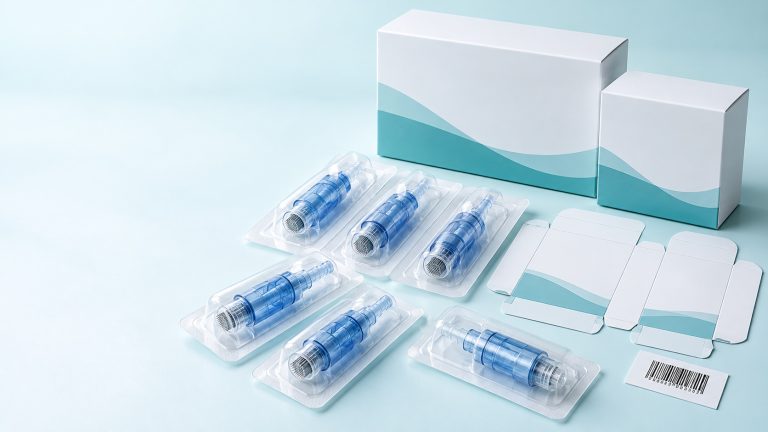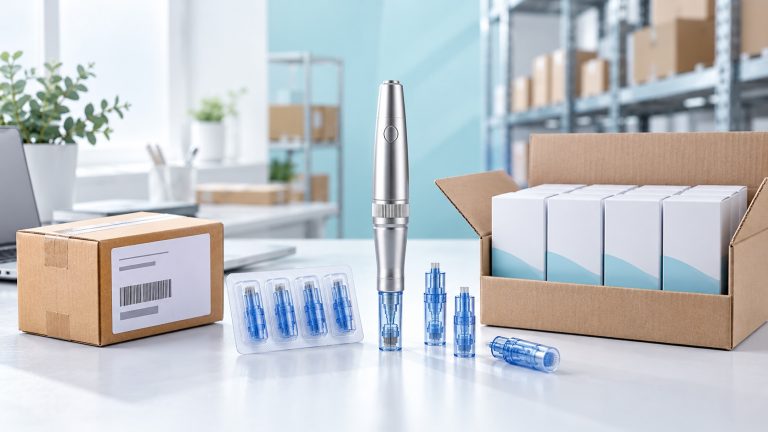

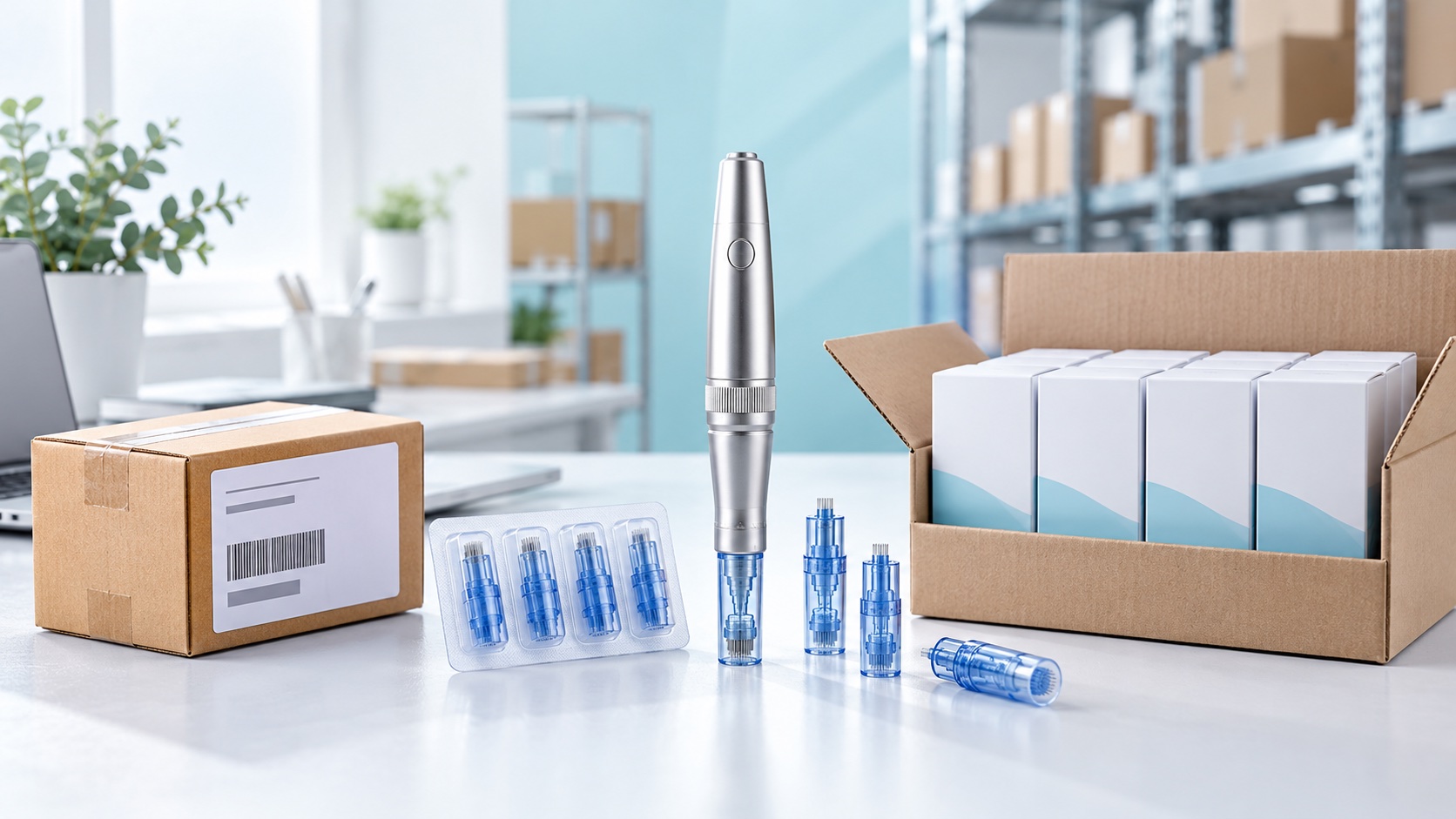
A private label microneedling kit wholesale project combines two different purchasing cycles: the device is the opening sale, while compatible cartridges create repeat demand. The kit must therefore be planned as a system rather than a collection of unrelated accessories.
This guide helps distributors, beauty academies, salon groups and ecommerce brands define a practical device-and-cartridge bundle, compare quotations and prepare a lower-risk launch.
Choose the kit's commercial purpose
Start with one primary buyer:
- salon starter kit: an understandable device, limited cartridge mix and straightforward reorder route;
- clinic professional kit: professional presentation, current specifications and dependable support;
- training-school kit: consistent student units, simple setup and predictable classroom consumables;
- distributor assortment: several model positions and separate cartridge inventory;
- ecommerce private label: controlled packaging, clear SKU names and shipping-friendly contents.
One kit should not try to satisfy every buyer. A clear purpose improves the model choice, price position and sales message.
Select the device before the cartridge assortment
Compare devices by:
- target price tier;
- current model specification;
- cartridge connector and reorder availability;
- charging arrangement;
- package presentation;
- expected warranty and quality support;
- destination and sales channel.
The Dr.Pen model comparison chart can help buyers shortlist M8, M8S, M9 and A11 before requesting a mixed-model or private-label quotation.
Define the opening cartridge mix
The opening kit should include enough cartridges to demonstrate the product without creating confusing inventory. Confirm:
- connector family;
- pin or nano configurations;
- quantity included per device;
- whether refills are sold individually or by box;
- reorder MOQ;
- lead time and safety stock;
- separate SKU and packaging identification.
Avoid choosing cartridges by pin count alone. The exact connector and device version must match. Use the replacement cartridge wholesale page to prepare a compatibility check.
Three practical kit structures
1. Sample or market-test kit
Designed for a buyer checking product fit before a larger order. It may contain one current device, a small number of matching cartridges and standard packaging. Keep customization limited until feedback is collected.
2. Salon or training starter kit
Designed for repeatable use and teaching. It should use a stable model, clear instructions, an agreed cartridge mix and a simple refill route. The package should make receiving and inventory control easy.
3. Distributor or private-label kit
Designed for resale under a controlled brand system. It may include device branding, outer packaging, cartridge boxes, barcode/SKU planning, inserts and destination-specific charging contents. This level normally requires a more detailed sample and artwork process.
Build one written bill of materials
List every item and quantity:
- device model and colour;
- cartridge connector and pin types;
- cartridges included with the device;
- separate refill boxes;
- holder or storage case;
- cable, adapter or plug arrangement;
- manual and insert;
- retail box and inner tray;
- barcode/SKU labels;
- shipping protection.
The quotation, approved sample and packing list should use the same bill of materials. This reduces disputes about accessories or package contents.
Plan branding by layer
Branding can be applied to different components:
- device logo;
- device retail box;
- cartridge outer box;
- individual cartridge pack where feasible;
- instruction insert;
- carton or inventory labels.
Each layer can have a different MOQ and setup cost. Ask the supplier to quote standard, light private-label and deeper custom options separately.
Use a complete sample approval
Approve the kit as the customer will receive it. Check:
- device appearance and operation;
- cartridge fit and identification;
- kit contents against the bill of materials;
- artwork, barcode and language;
- charging contents;
- retail-box protection;
- shipping carton and pack-out.
Keep photos, artwork and the approved sample as the production control reference.
Calculate landed cost and reorder economics
The device price alone does not determine whether the kit works. Calculate:
- device and cartridge cost;
- packaging and setup;
- sample and revision cost;
- carton dimensions and freight;
- duty, tax and destination charges;
- storage and fulfilment;
- expected returns or replacements;
- refill-cartridge margin;
- reorder lead time and safety stock.
The consumable reorder may be more valuable than the opening device margin. Make sure the buyer can identify and reorder the correct cartridge after the initial sale.
Choose an opening quantity
For a first market test, buyers can discuss a sample or low-MOQ standard order. Larger private-label quantities become more practical when the device, cartridge demand and package have been validated.
Ask for three separate scenarios:
- sample or evaluation quantity;
- 10-unit or starter allocation;
- 50/100-unit distributor allocation.
The Dr.Pen MOQ and distributor price guide explains how quantity, model mix and cartridge planning affect a wholesale quotation.
Prepare the repeat-order system
Record:
- devices sold or installed;
- cartridge consumption by SKU;
- available refill inventory;
- average weekly or monthly demand;
- supplier production and transit time;
- reorder point;
- quality claims and replacements;
- artwork version and packaging stock.
Training schools should also estimate cartridges per student and course intake. Distributors should separate fast-moving refills from slower device models.
Compare suppliers beyond price
Evaluate whether the supplier can:
- confirm current device and cartridge compatibility;
- provide representative samples;
- maintain consistent pack-out and SKU identification;
- explain customization scope and MOQ;
- provide current product and commercial documents;
- support quality issues and replacements;
- supply refill cartridges after the opening device order;
- communicate production and dispatch changes.
Kit-project red flags
- A quotation does not list the cartridges or accessories included.
- The supplier treats all cartridge connectors as universal.
- Artwork is requested before the device version is confirmed.
- A large private-label order is required before a representative sample.
- One certificate is used to support unrelated products.
- Repeat-cartridge supply is unclear.
- Quality-issue handling is only verbal.
- The shipping carton and package dimensions are missing.
Information to send for a kit quotation
- destination country and buyer type;
- preferred device or price tier;
- quantity of devices;
- cartridge types and quantity per device;
- separate refill quantity;
- logo and packaging scope;
- language, barcode and insert needs;
- charging or plug requirement;
- sample requirement;
- target launch date and expected repeat demand.
Final recommendation
A successful private-label kit creates a clear path from the first device sale to the correct cartridge reorder. Define one target buyer, use a written bill of materials, approve a complete sample and calculate both launch cost and refill economics.
Justech supports flexible-MOQ device and cartridge discussions for salons, clinics, training schools and distributors. Send your target market, model, quantity and kit requirements for a tailored quotation.
Frequently asked questions
Can I combine different Dr.Pen models in one wholesale kit order?
Mixed-model orders may be possible subject to stock and the MOQ for each customization. Confirm the model allocation and compatible cartridges in writing.
Can the device and cartridge boxes use the same brand design?
They can share one brand system, but each product and cartridge SKU should remain clearly identified.
Should I start with a standard kit before private label?
For a new market, a sample or low-MOQ standard kit can reduce risk before larger packaging and printing commitments.
What creates repeat revenue?
The device begins the customer relationship; compatible cartridge reorders create the recurring product cycle. The connector, SKU and refill route must remain clear.
Compare models before approving the project: use the 2026 Dr.Pen M8, M8S, M9 and A11 comparison chart to match the device, cartridge plan and buyer segment before finalizing packaging or order quantities.