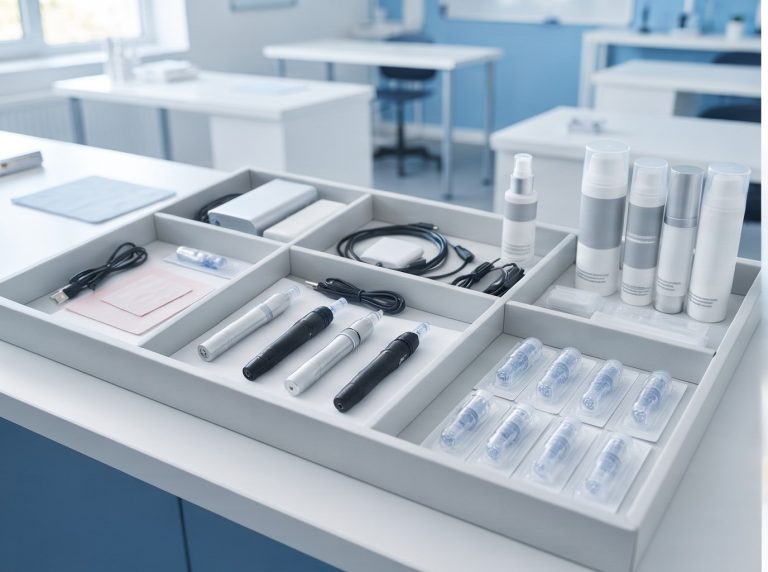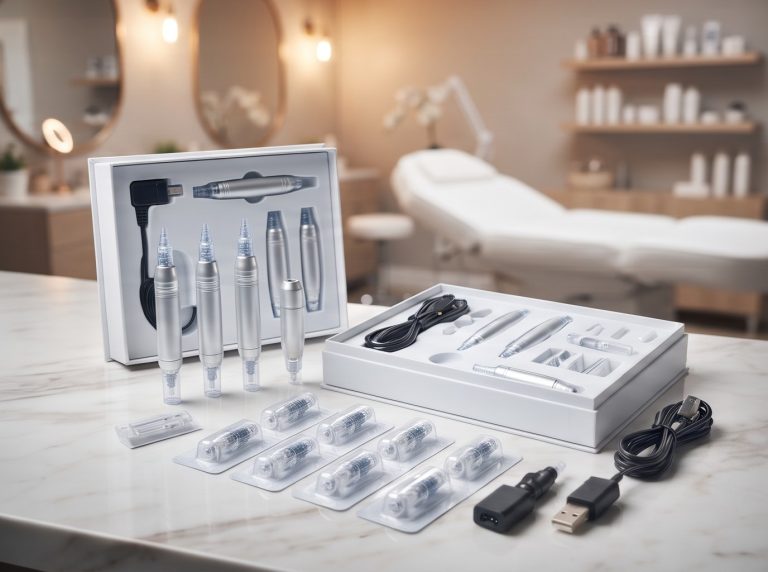


Microneedling for wrinkles is increasingly offered by aesthetic clinics that want a minimally invasive treatment option for clients concerned about fine lines, uneven texture and visible signs of skin aging. However, good outcomes depend on more than choosing a pen: clinics need appropriate client screening, trained operators, documented protocols, sterile single-use cartridges and realistic treatment expectations.
This guide explains how professional microneedling is used for wrinkle-focused services, what the evidence suggests, which safety questions matter and how clinic buyers can evaluate devices and supplies before requesting a wholesale quote.

How microneedling for wrinkles works
Professional microneedling devices use controlled, repeated needle movement to create microscopic channels in the skin. The purpose is to trigger a normal wound-healing response that may support collagen and elastin remodeling over time. For wrinkle services, providers usually focus on overall texture, fine lines and selected facial areas rather than promising an instant or permanent removal of wrinkles.
Results vary with age, skin condition, treatment settings, technique, aftercare and the number of sessions. A responsible consultation should explain that gradual improvement is more realistic than a dramatic one-session transformation. Photography under consistent lighting can help clinics document progress without misleading clients.
What results can clients realistically expect?
Published clinical reviews report that microneedling can improve the appearance of facial wrinkles and skin texture in appropriately selected patients, although study methods and treatment protocols differ. The U.S. Food and Drug Administration has legally authorized certain microneedling devices for specific aesthetic indications, including improvement in the appearance of facial wrinkles for adults aged 22 years or older. This does not mean every pen, cartridge or protocol has the same authorization.
Clinics should check the regulatory status and intended use of the exact device in their market. The FDA microneedling device overview also notes that no medical microneedling devices are authorized for over-the-counter sale in the United States. Local rules can differ, so buyers should verify requirements before purchasing or advertising a service.
Safety, candidacy and informed consent
Microneedling is not suitable for every client. Active infection, uncontrolled skin disease, a history of poor wound healing, certain medications, pregnancy-related considerations and other medical factors may require postponement or referral. A trained professional should take a health history, inspect the treatment area and obtain informed consent before starting.
- Use a new, sterile, single-use cartridge for every client and every session.
- Follow the device manufacturer’s cleaning, disinfection and operating instructions.
- Do not reuse cartridges or share accessories between clients.
- Document treatment settings, cartridge type, lot information and client response.
- Give clear aftercare instructions and explain when the client should seek medical advice.
Potential effects can include redness, tightness, swelling, dryness, discomfort, bruising, pigment changes or infection. Providers should discuss risks in advance and avoid combining microneedling with unapproved products. The FDA consumer safety guidance is a useful starting point for staff education.
Treatment planning for an aesthetic clinic
A repeatable wrinkle-treatment service needs a written protocol. The protocol should define who may perform the treatment, consultation questions, contraindications, preparation, device settings, endpoint observations, aftercare and incident escalation. Settings should follow the device instructions and the practitioner’s qualified training; deeper or more aggressive treatment is not automatically better.
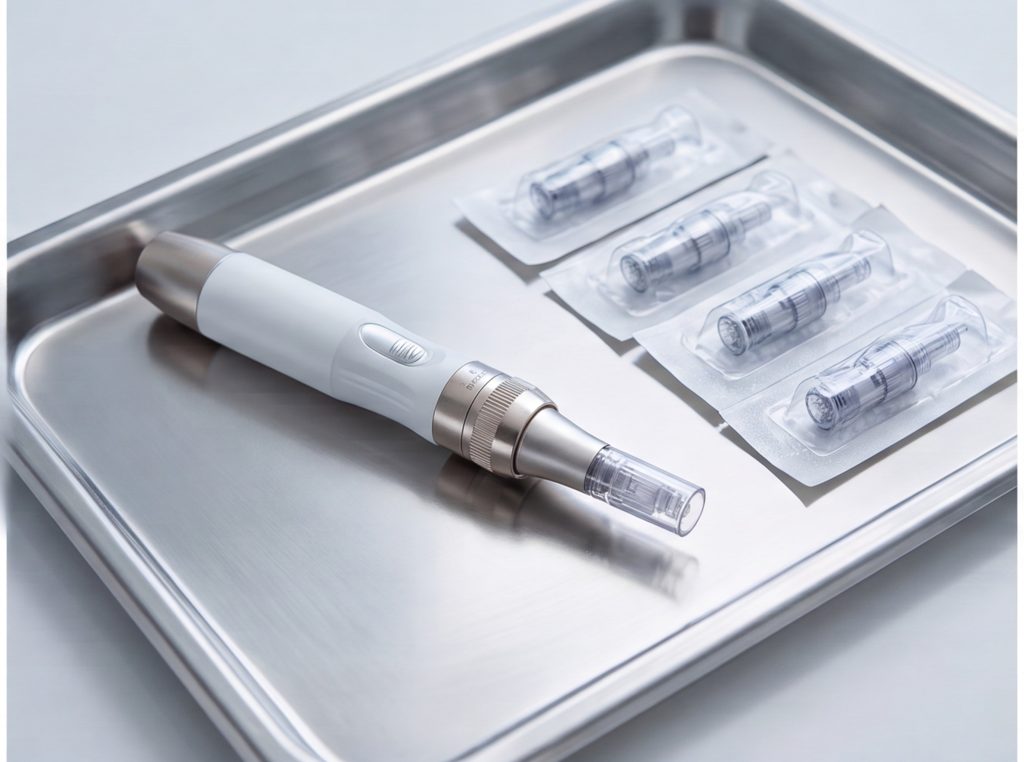
Before adding a new model to the treatment room, test the complete workflow: handpiece charging, speed adjustment, cartridge attachment, depth control, packaging inspection, stock rotation and disposal. Clinics comparing treatment depths can also review our 0.5 mm device safety buyer guide and 1.0 mm professional device guide. These pages are procurement references, not a substitute for local clinical training.
Device and cartridge checks for clinic buyers
The best microneedling pen for a clinic is the one that fits its service scope, regulatory obligations, staff training and ongoing supply plan. Buyers should compare more than the unit price. Ask the supplier for clear model identification, compatible cartridge options, packaging information, warranty terms, availability of replacement parts and expected dispatch time.
- Traceability: confirm model, cartridge type, batch or lot references and QR verification where offered.
- Compatibility: ensure the cartridges ordered are designed for the exact handpiece model.
- Sterility: inspect individual seals, expiry information and storage instructions.
- Supply continuity: estimate monthly cartridge use and keep a sensible reorder point.
- Commercial fit: compare MOQ, tiered pricing, customization, warranty and quality-issue support.
For a broader stock-planning framework, see our microneedling supplies wholesale guide. It covers device-to-cartridge ratios, buffer stock and the questions buyers should include in a quotation request.

B2B sourcing checklist before requesting a quote
A useful B2B inquiry gives the supplier enough information to recommend a compatible package. Include your destination country, business type, preferred pen model, estimated device quantity, monthly cartridge demand, cartridge pin configurations and whether you need private-label packaging. Buyers should also ask which documents are available for the exact product and which claims may legally be used in their market.
Justech International supplies Dr.Pen microneedling products for clinics, salons, training providers, resellers and wholesalers. We support flexible MOQ, tiered wholesale pricing, current models, customization options, ready-stock planning and a two-year device warranty, subject to the confirmed quotation and product terms. Quality-related return or exchange support and needle-head quality support can also be discussed for the selected order.
Request a clinic wholesale recommendation
Send us your country, business type, preferred model, quantity, cartridge requirements and packaging needs. We will help you compare a practical starter order, replenishment plan and current shipping options for your market.
Frequently asked questions
Does microneedling remove wrinkles permanently?
No treatment can responsibly promise permanent wrinkle removal. Microneedling may improve the appearance of fine lines and skin texture, but outcomes and durability vary. Clinics should set realistic expectations and discuss maintenance plans individually.
How many sessions are needed for wrinkle-focused treatment?
The number and spacing of sessions depend on the client, treatment area, device instructions and professional assessment. A provider should create an individualized plan rather than use the same schedule for everyone.
Can a clinic reuse a microneedling cartridge?
No. A sterile single-use cartridge should be opened for one client and discarded after the session in accordance with local sharps and clinical-waste rules.
What should a wholesale inquiry include?
Include your country, buyer type, device model, order quantity, preferred cartridges, monthly consumption estimate, packaging requirements and target delivery date. This helps the supplier check compatibility and prepare a more accurate quotation.
This article is for general procurement and educational purposes and does not provide medical advice. Treatment decisions should be made by appropriately trained professionals under applicable local rules.