
Derma rolling is a trending skincare hack promising smoother skin. But how can you achieve results without damaging your skin?
With structured guidance, using a derma roller can boost skin health by promoting collagen and enhancing product absorption.
Using a derma roller can seem intimidating, especially if you’re new to it. Here’s how it works and why it’s effective.
What is a Derma Roller and How Does It Work?
Curious about derma rollers? They promise to rejuvenate your skin. So how do they function?
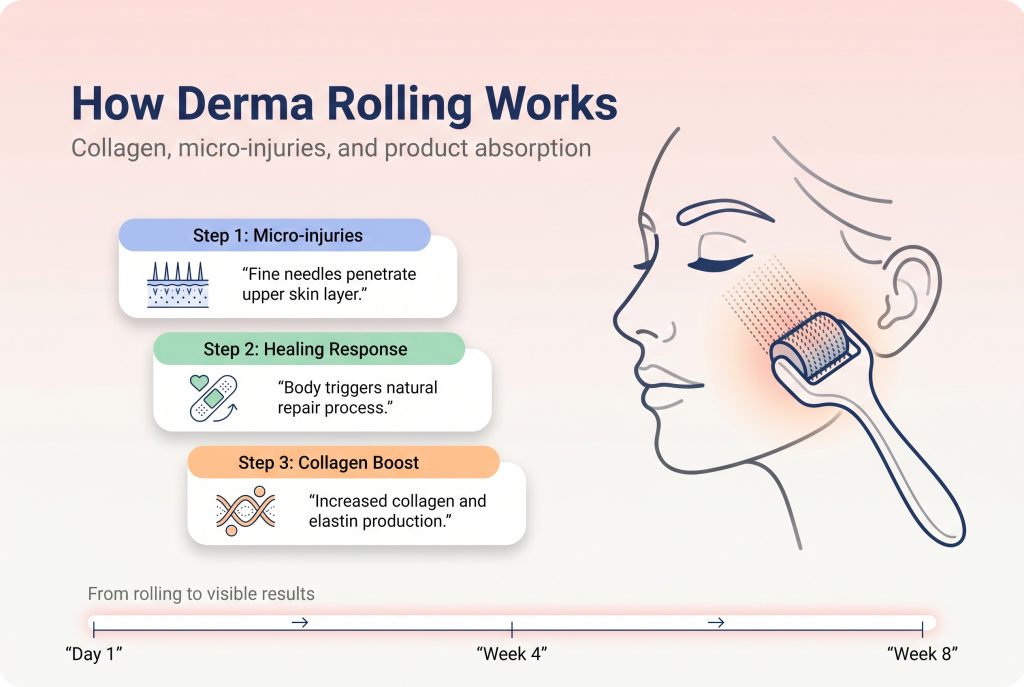
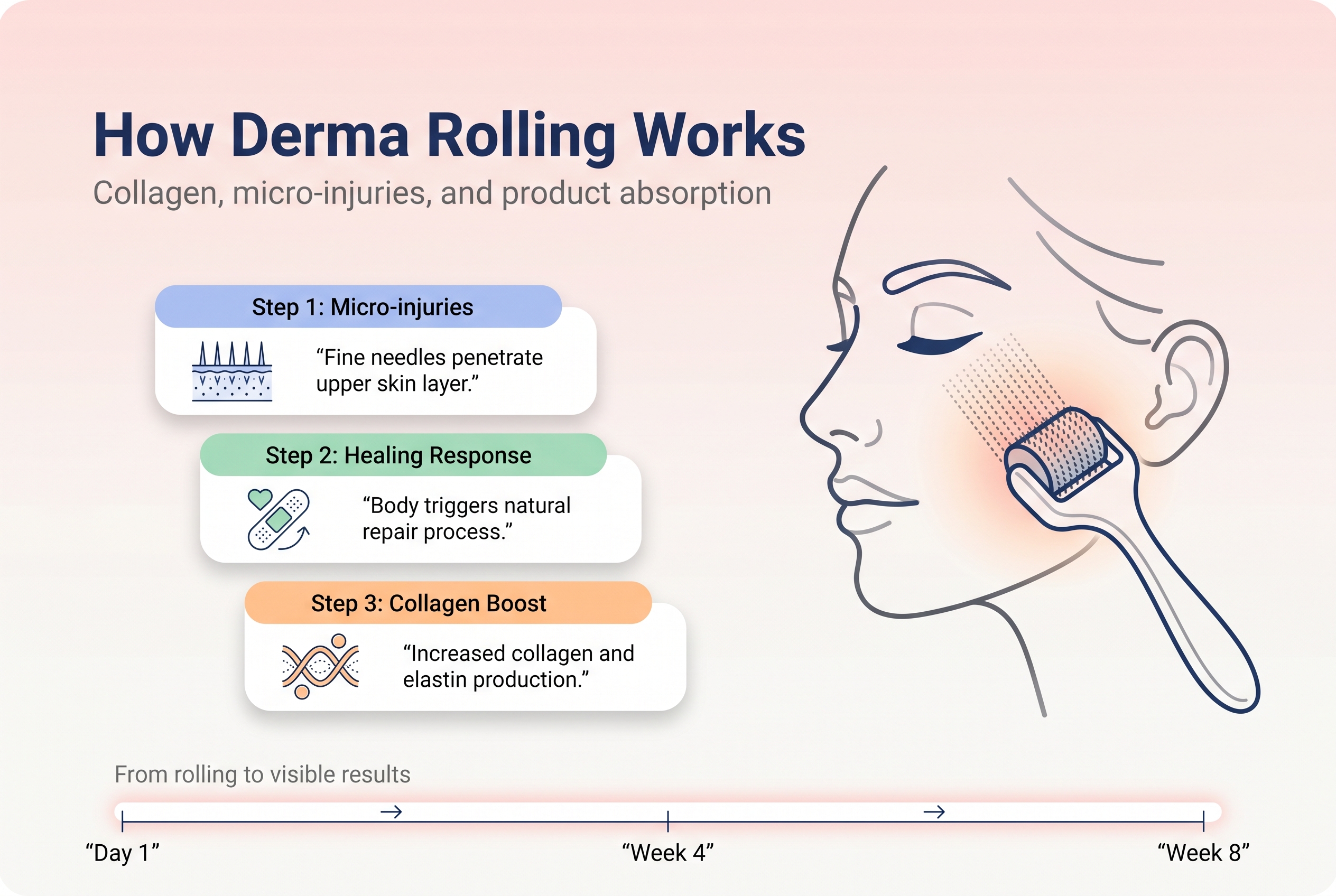
A derma roller uses tiny needles to create micro-injuries, stimulating collagen production and improving skin health. First developed in the 1990s, it’s now a staple for at-home skincare.
Diving Deeper: Understanding Microneedling
Microneedling, facilitated by the derma roller, involves rolling hundreds of tiny needles over the skin’s surface. These needles penetrate the top layer of the skin, creating controlled micro-injuries. Your body’s natural healing process responds by producing collagen and elastin. This enhances skin texture and firmness, reducing signs of aging. Scientific studies back the effectiveness of microneedling. For example, clinical trials have shown significant improvement in skin texture and reduction of scars, proving its claim to rejuvenate and restore the skin.
Benefits of Using a Derma Roller?
Is derma rolling worth the hype for your beauty routine?
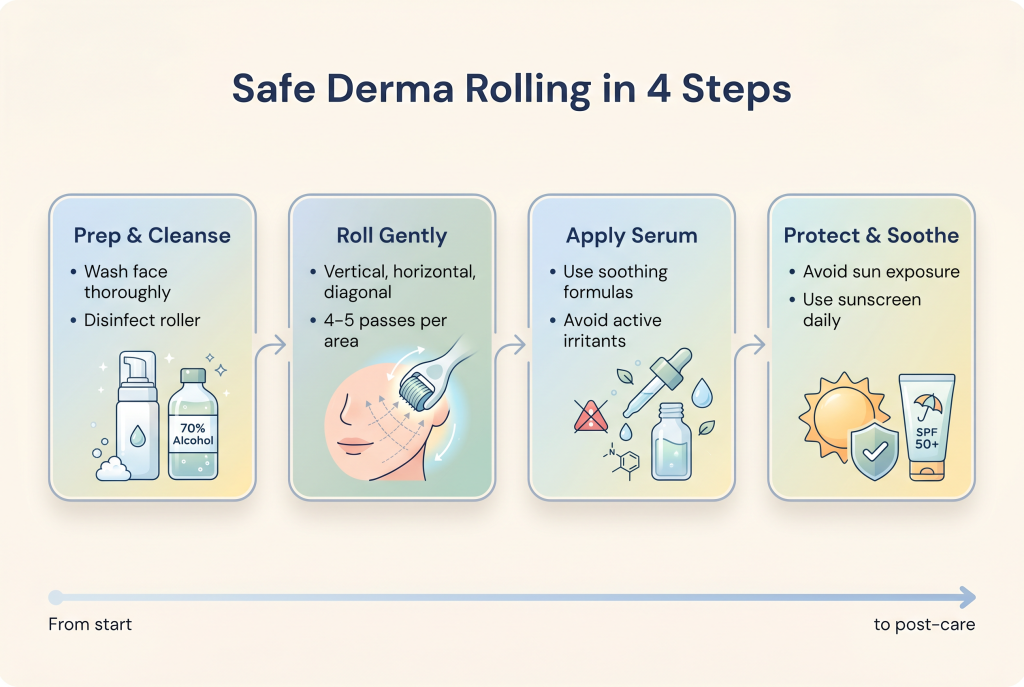
Derma rolling can refine skin texture, diminish acne scars, and boost absorption of beauty products for a more radiant look.
Dive Deeper: Multifaceted Advantages
The benefits of using a derma roller extend beyond basic skin improvement. It can remarkably increase absorption of active ingredients in your skincare products by up to 90%. This makes your existing creams and serums far more effective. Due to its collagen-boosting effects, wrinkles and fine lines soften and skin elasticity improves. In a specific study with acne scar patients, a noticeable reduction in scar depth was reported over a few months of consistent use. Patient testimonials also frequently mention the pleasurable surprise of smoother, firmer skin—highlighting derma rollers as a key tool in skincare regimens.
Choosing the Right Derma Roller?
Every skin type is unique. How do you pick the perfect derma roller?
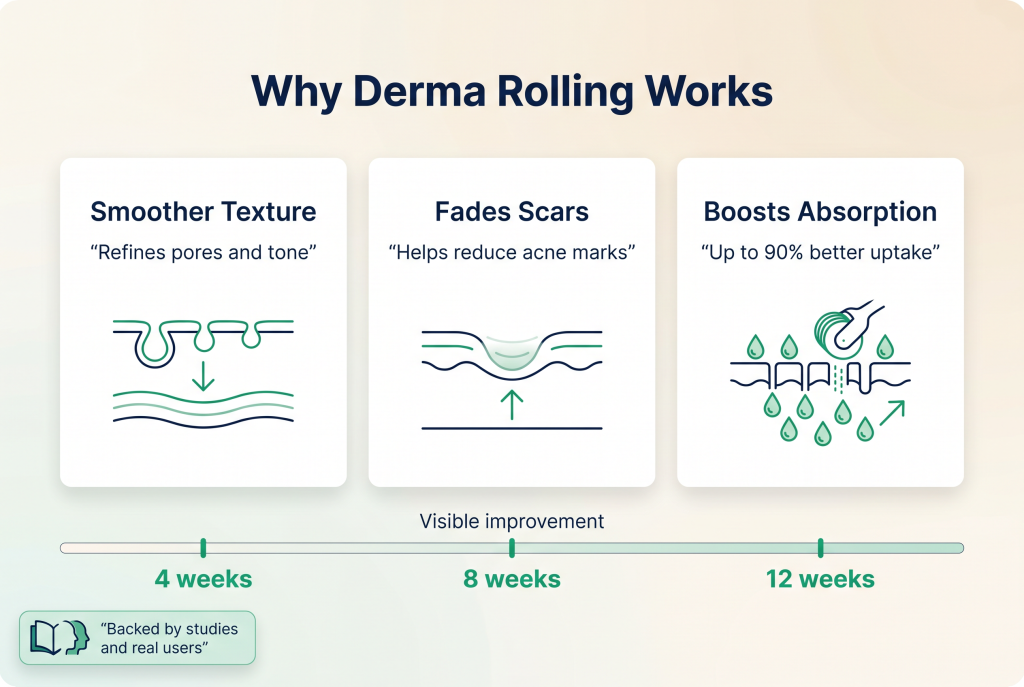
Selecting a derma roller involves considering needle length related to skin goals, with expert suggestions for different experience levels.
Dive Deeper: Tailoring Your Tool
Choosing the right derma roller requires understanding different needle sizes and their corresponding uses. For beginners, a needle length of 0.25mm to 0.5mm is generally safest and sufficient for enhancing product absorption. More experienced users might opt for needles up to 1.0mm, which are better for deeper concerns like acne scars. However, needles longer than 1.5mm are typically reserved for professional medical use due to potential risks. It’s critical to match needle size to your skin’s feedback and conditions to navigate this effectively. Experimenting initially at lower intensities can ease you into the process safely.
Step-by-Step Guide to Using a Derma Roller?
Ready to start derma rolling safely at home? Here’s your comprehensive guide.
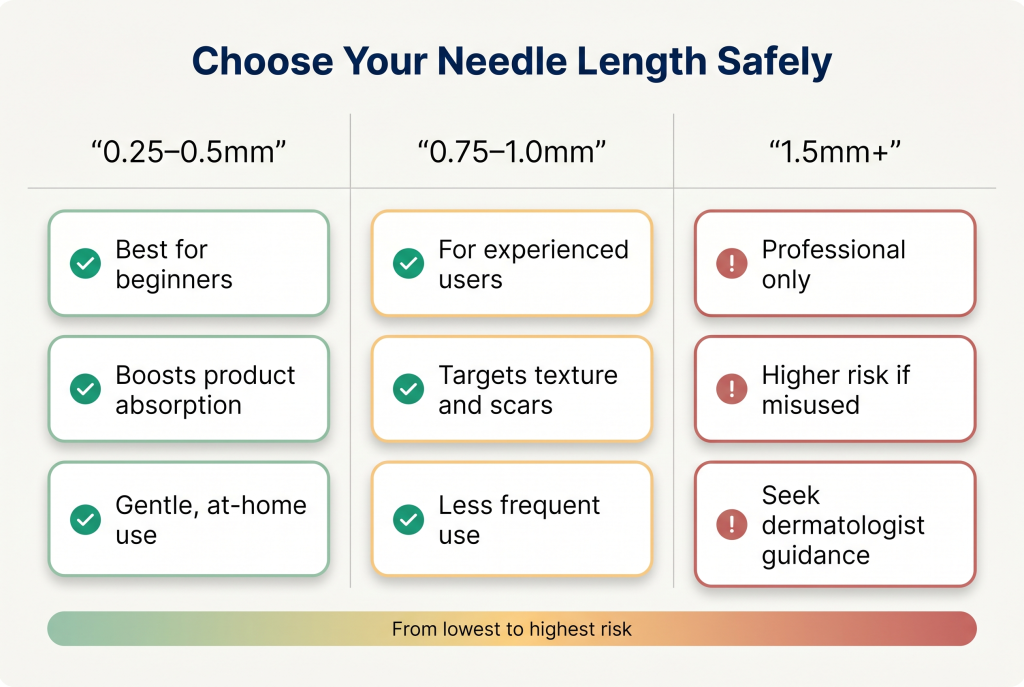
Properly preparing and using a derma roller involves specific pre-treatment, rolling techniques, and post-treatment care for effective results.
Dive Deeper: Mastering the Derma Roller Technique
Before rolling, cleanse your skin thoroughly. Disinfect your derma roller using isopropyl alcohol to maintain hygiene. Start by rolling gently over your skin, ensuring even coverage in all directions (vertical, horizontal, and diagonal). Pressure remains light and consistent throughout to avoid injury. A common guideline is to roll each area of your face 4-5 times. After rolling, your skin is highly receptive to skincare products, so apply nourishing serums rich in hyaluronic acid or peptides. Post-treatment care includes avoiding sun exposure and applying sunscreen vigilantly.
Safety Considerations When Using a Derma Roller?
Safety can’t be overlooked; what precautions ensure a problem-free rolling experience?
Avoiding mistakes and recognizing irritation signs are crucial for maintaining skin safety and ensuring positive rolling outcomes.
Dive Deeper: Safe Rolling Practices
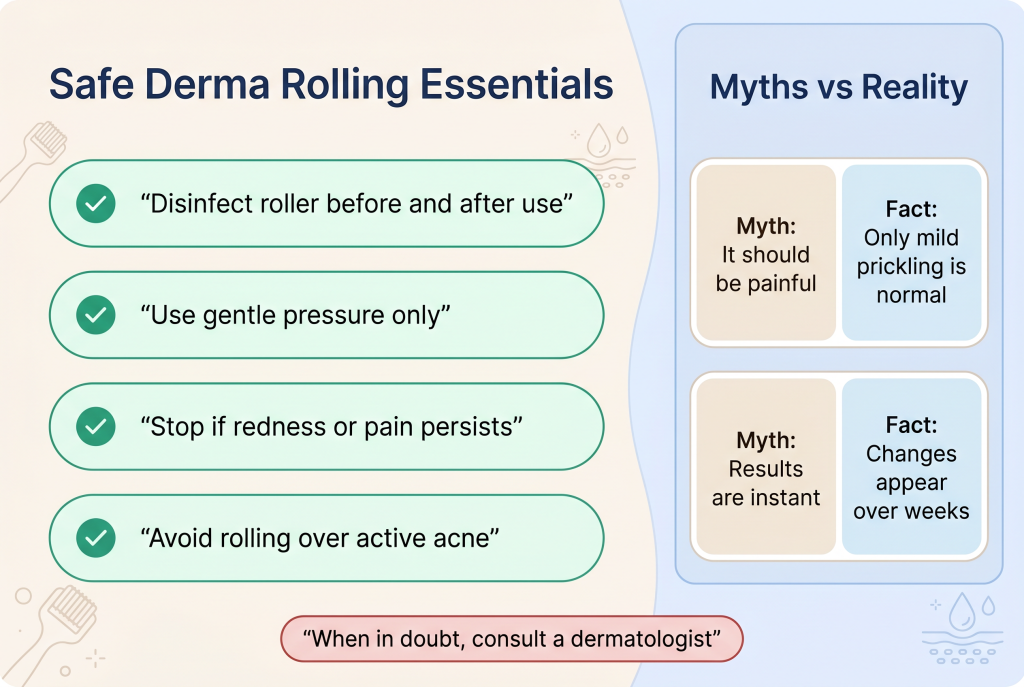
Understanding safety while derma rolling is essential to avoid adverse effects. Common mistakes include applying excessive pressure or using dirty equipment. Both can irritate the skin and lead to breakouts or infections. Use the roller as gently as possible and regularly sterilize it. If your skin reacts with prolonged redness, discomfort, or signs of infection like pus, stop use immediately. Consulting a dermatologist can help guide the next steps. Always listen to your skin’s feedback, and never force the process if it feels wrong.
FAQs about Derma Rolling?
What common questions arise about derma rolling for first-timers?
Frequently Asked Questions help clarify common concerns such as expected results, skin types compatibility, and misconceptions about derma rolling.
Dive Deeper: Clarifying Misconceptions
As derma rolling grows in popularity, so do the myths surrounding it. A frequent question is about pain—most users find the sensation tolerable, likening it to a mild prickling. Concerns regarding skin types are common; derma rolling is generally suitable for all skin types, though those with active acne should approach with caution to avoid spreading bacteria. Misinformation about instant results also circulates; in reality, consistency and patience are key, as visible changes typically occur over weeks. Distilling these insights helps new users feel confident in embarking on their derma roller journey.
Conclusion
Proper use and care are crucial for effective derma rolling, providing significant aesthetic benefits when applied correctly.
Related wholesale resources
Need Dr.Pen wholesale pricing?
Tell us your country, product model and estimated quantity. We will recommend suitable models, cartridge options and shipping method.